
Drain Cleaning & Sewer Repair in Middlesex County, NJ
Local Drainage Service Expertise
Across Middlesex County neighborhoods from Edison to South Brunswick, aging underground infrastructure meets heavy seasonal rainfall and mature tree growth. Drainage Service in Middlesex County, NJ requires inspecting sewer lines, cleaning main drains, and addressing root intrusion before backups occur. Properties built mid-century often have cast-iron or clay pipes that deteriorate under soil pressure and seasonal expansion. This page covers sewer drain cleaning, line diagnostics, and how local soil and weather conditions drive the need for professional repairs.
When slow drains or foul odors appear, diagnosis must happen first. When storms saturate soil or tree roots penetrate pipes, repairs must be precise. Learn what's involved and why proximity to your home matters for fast response.
How We Work
Every drainage problem in Middlesex County starts with a clear picture of what's happening inside your pipes.
What's Involved
Sewer line repair in Middlesex County follows a structured path. First, video inspection confirms pipe condition and locates the exact failure point. Next, diagnosis determines if cleaning, localized repair, trenchless methods, or full replacement is needed.
Camera Inspection
We send a video scope into your sewer line to see cracks, blockages, root intrusions, and joint separations. This removes guesswork.
Diagnosis & Plan
We explain findings and recommend the right solution: snaking, hydro jetting, trenchless repair, or excavation based on actual pipe condition.
Repair Execution
Work is performed according to county and municipal standards. Surface disruption is minimized; excavation is targeted only to confirmed failure areas.
Verification & Closeout
After repair, we verify the fix with follow-up inspection. All work is documented for your records and any future inspections.
You'll always know what's happening next—and why.
Our Services
In Middlesex County, where mid-century homes and modern suburbs both face aging pipes, we offer targeted solutions.
Drain Cleaning & Line Clearing
Slow drains, gurgling fixtures, or backups often start as clogs. In South Plainfield, Edison, and Woodbridge neighborhoods, interior cast-iron piping accumulates grease, hair, and debris over decades. We use snaking and hydro jetting to clear blockages without harsh chemicals that damage pipes.
- Mechanical drain snaking for localized clogs
- High-pressure hydro jetting to clear years of buildup
- Main line cleaning when multiple fixtures slow simultaneously
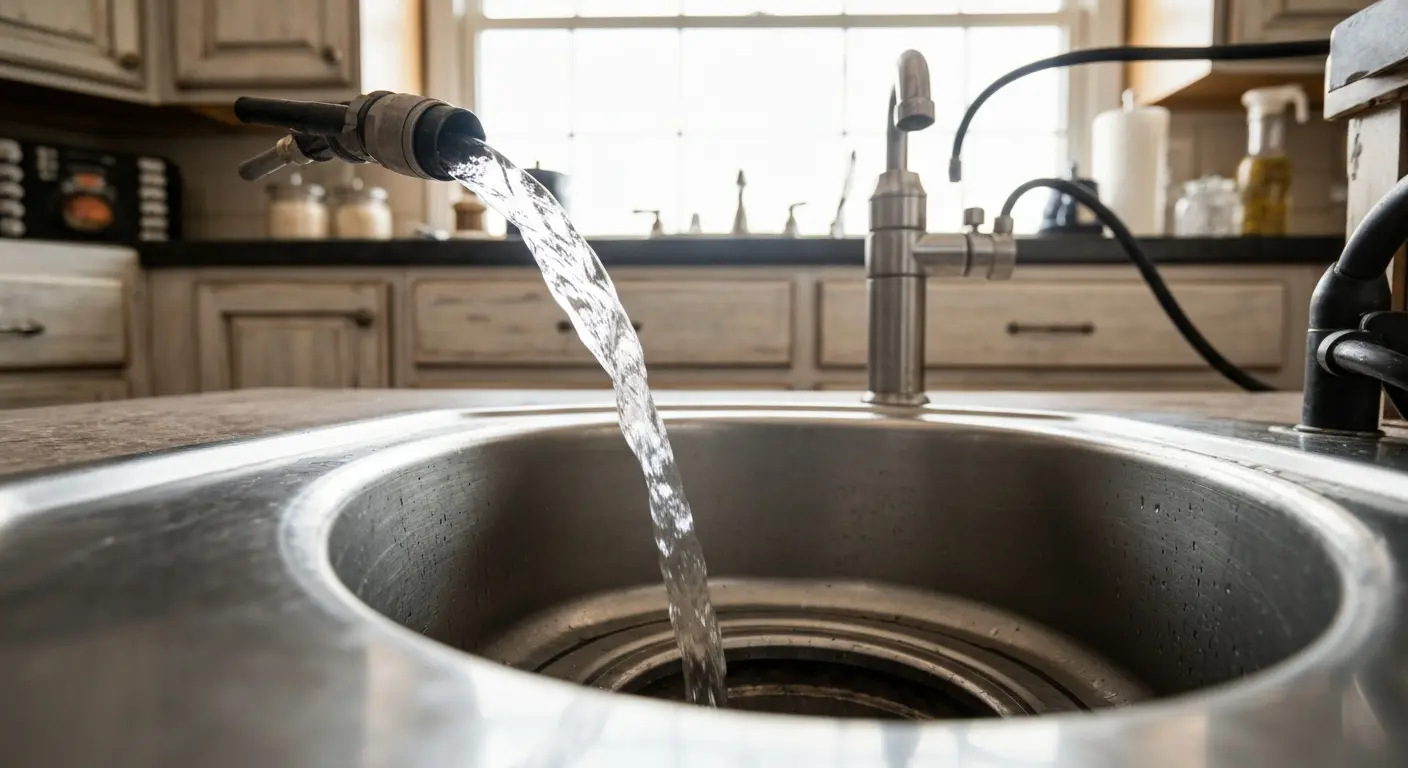
Professional hydro jetting clears grease and debris from kitchen drain lines near New Brunswick area.
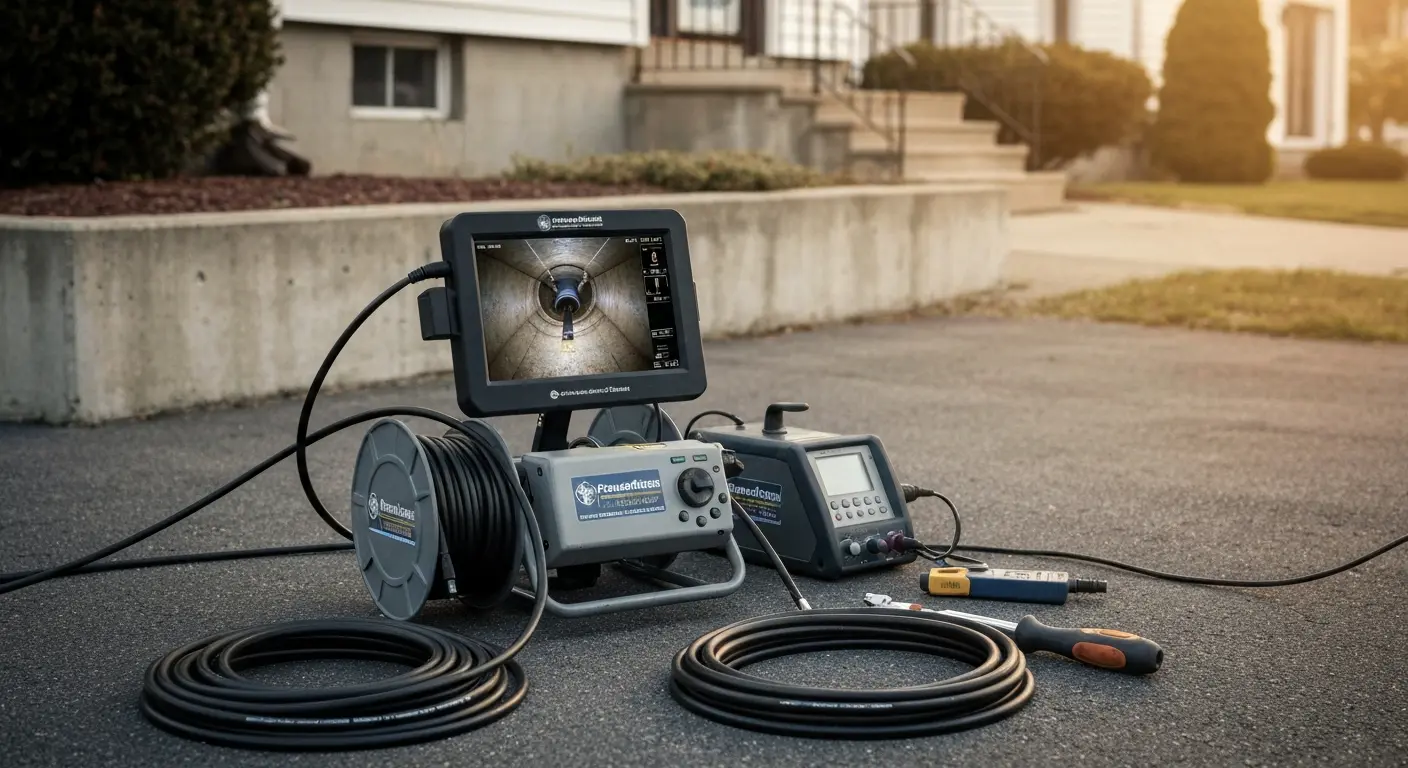
Video inspection reveals root intrusion in a Sayreville sewer lateral. Diagnosis determines repair method.
Sewer Line Repair & Replacement
In Middlesex County, properties often have clay, cast-iron, or Orangeburg sewer pipes installed 50+ years ago. Tree roots from mature landscaping penetrate joints. Seasonal soil movement cracks pipes. We locate problems and repair them correctly.
- Trenchless pipe lining (CIPP) to seal cracks without digging
- Pipe bursting for full replacements with minimal yard impact
- Targeted excavation when only a section needs replacement
Root Intrusion Removal
Established neighborhoods around Metuchen, Highland Park, and North Brunswick have mature trees whose roots seek out sewer line moisture. Intrusion causes blockages, cracks, and eventually line failure. Hydro jetting and root cutting remove obstructions; inspection reveals if the pipe needs repair.
- Root removal via hydro jetting and mechanical cutting
- Video inspection to assess pipe damage after root removal
- Prevention guidance on future intrusion risk
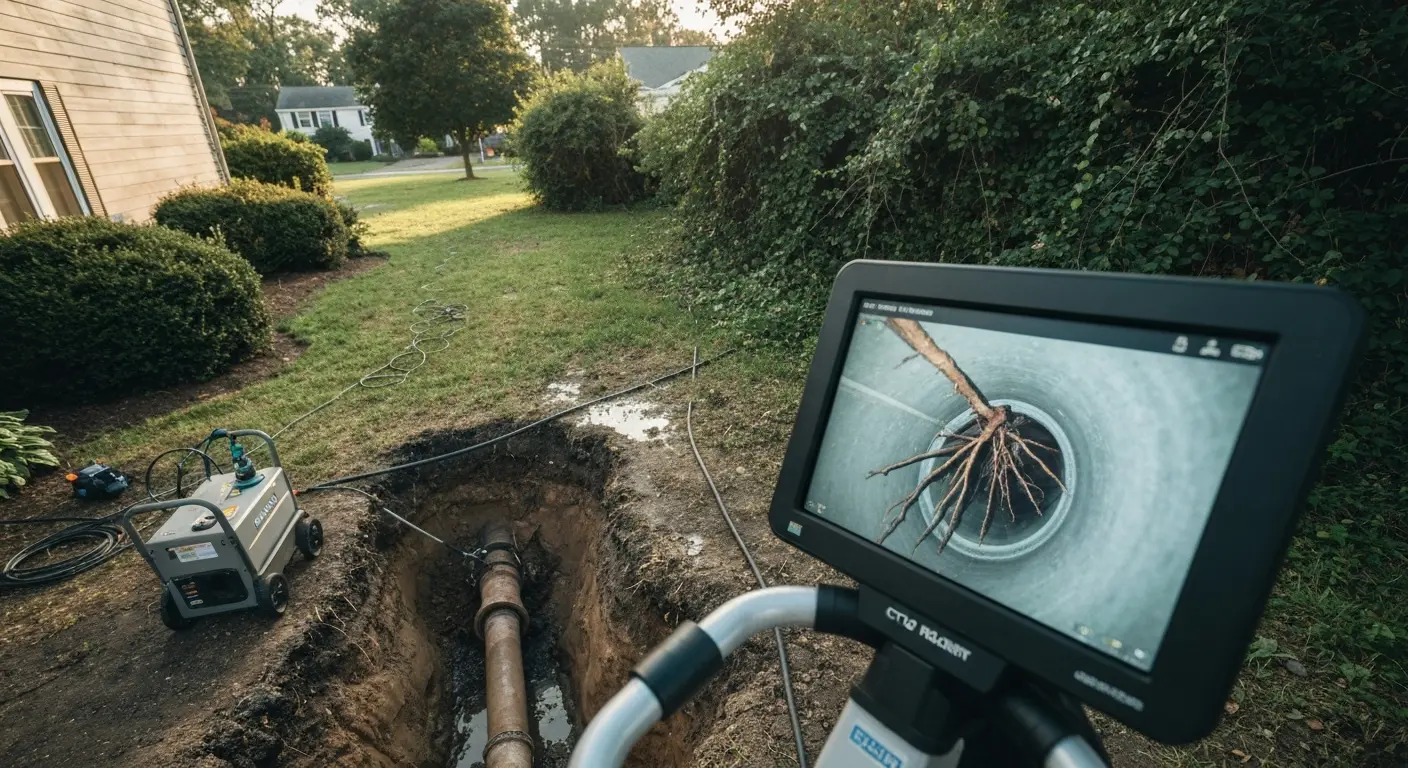
Roots have penetrated a sewer lateral in an East Brunswick yard with mature landscaping. Video inspection guides next steps.
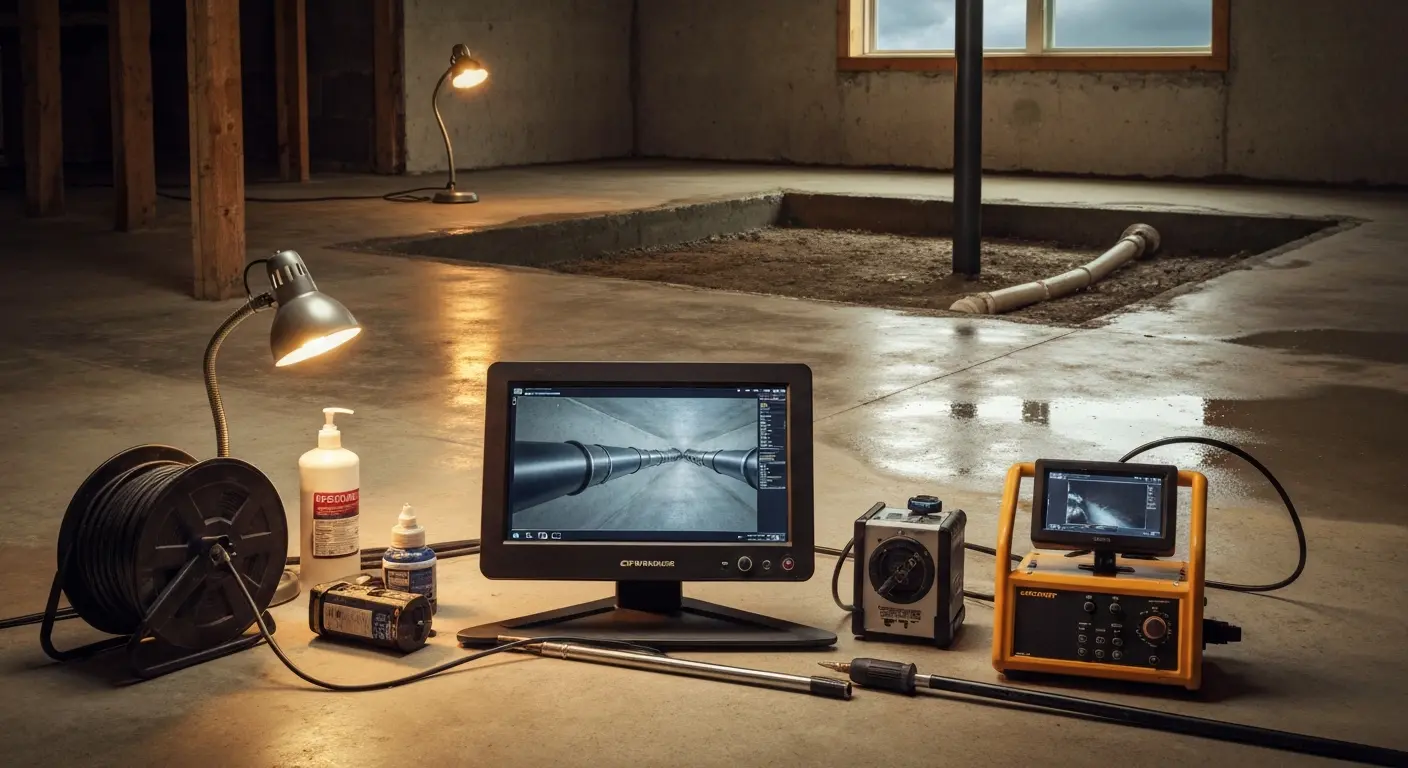
Basement sewer backup during heavy storm in South River area. Emergency response and proper diagnostics prevent recurrence.
Sewer Backup Recovery
Heavy rainfall in Middlesex County can overload combined sewer systems or saturate soil, causing backups into basements and crawl spaces. Initial response stabilizes the situation. Follow-up inspection determines whether the backup was from a blockage, structural failure, or stormwater infiltration.
- Emergency drain clearing when sewage backs up
- Investigation to confirm root cause
- Repair plan to prevent recurrence
Why This Matters Locally
Middlesex County's geography, soil, weather, and age of infrastructure create predictable drainage challenges.
Aging Underground Infrastructure
Many properties in Edison, Woodbridge, Old Bridge, and surrounding towns were developed in the 1950s–1970s. Original clay, cast-iron, and Orangeburg sewer pipes have now been in service for 50–70 years. These materials naturally deteriorate. Thin walls crack under soil pressure. Joints separate. Replacing a deteriorated lateral is more reliable than patching repeatedly.
Soil Conditions & Seasonal Stress
Middlesex County sits on the inner coastal plain with loamy topsoil over dense clay subsoil. Clay expands when wet and contracts when dry. New Jersey's seasonal temperature swings (freezing winters, hot summers) cause this cycle repeatedly. Underground pipes experience constant pressure shifts. Combined with mature tree roots seeking moisture, these conditions accelerate pipe failure. Heavy spring and fall rainfall saturates soil, worsening infiltration into cracked pipes.
Diagnosis before repair prevents costly mistakes. A slow drain may be a clog, a cracked pipe, or soil infiltration. Video inspection shows which, so the fix actually works.
Rare Rainfall & Combined Systems
Parts of Middlesex County (particularly areas near the Raritan River watershed) experience stormwater infiltration into sanitary sewer lines. During heavy rain, the system becomes overloaded. Sewage can back up into homes. Municipalities and county agencies actively work to eliminate illegal stormwater connections, but the problem persists in older areas. Proper sewer inspection and grading helps confirm whether a backup is from a private line blockage or a public system overload.
Featured Question
What are the common causes of sewer backups in Middlesex County homes?
Sewer backups in Middlesex County typically stem from three causes: clogs from grease, hair, or non-flushable items blocking the line; tree root intrusion penetrating old clay or cast-iron pipes; or structural pipe failure (cracks, separations, or collapse) often triggered by soil movement and seasonal weather. Heavy rainfall can expose pre-existing failures by saturating soil and increasing pressure on compromised pipes. A single slow drain usually points to a local clog. Multiple slow fixtures or sewage backing up into tubs and floor drains indicate a main sewer line blockage or structural issue that requires professional video inspection.
Diagnosis always comes first. Never guess.
Serving Middlesex County Communities
We provide drainage service across all Middlesex County neighborhoods, from established suburbs to newer residential areas.
Our service area includes Edison, Woodbridge, South Plainfield, East Brunswick, North Brunswick, Sayreville, South River, Middlesex, Metuchen, Highland Park, Piscataway, South Brunswick, Cranbury, Monroe Township, and neighboring communities. Whether your property sits near the Raritan River in Sayreville, in the older residential core of South Plainfield, or in the expanding suburban sections of North Brunswick, we understand local soil conditions, aging infrastructure patterns, and permit requirements in your township or borough.
Prompt Response in Your Area
When a drain backs up or a sewer lateral fails, fast professional diagnosis prevents structural water damage and health hazards. Because we serve Middlesex County directly, we reach your home quickly and bring the right equipment and expertise on the first visit. Proper inspections, clear explanations, and targeted repairs mean you avoid guessing and get reliable results.
Serving Middlesex County since [INSERT FOUNDING YEAR]. 500+ local drainage projects completed. Every repair is backed by inspection and documented for your records.
Frequently Asked Questions
What does a sewer camera inspection show?
A video inspection reveals cracks, root intrusions, joint separations, debris buildup, scale, and the exact location of any blockage or pipe damage. This visual confirmation eliminates guesswork and supports the right repair choice.
Is trenchless pipe repair available in Middlesex County?
Yes. Trenchless methods (pipe lining and pipe bursting) are viable when pipes have structural issues but access points can be established. These methods minimize yard and driveway disruption. Inspection determines if your line qualifies.
Do I need a permit to repair my sewer lateral in Middlesex County?
Most municipalities in Middlesex County require permits for sewer repair or replacement. We handle permit coordination with your local health department or public works office, ensuring the work meets code and is properly inspected and documented.
What causes clay and cast-iron pipes to fail?
Clay and cast-iron pipes installed 50+ years ago deteriorate from soil pressure, seasonal soil movement, tree root intrusion, and internal scale and corrosion. Cracks develop. Joints separate. Repair or replacement becomes necessary to prevent backups and foundation damage.
How often should I have my sewer line inspected?
If you have recurring clogs or slow drains, annual inspection is wise. Properties with older pipes (50+ years) and mature tree roots benefit from inspection every 2–3 years. After repair or replacement, inspections verify the work and catch new issues early.
DISCOVER WHAT OUR CUSTOMERS HAVE TO SAY ABOUT US
REVIEWS
proudly serving these areas
Bergen County, NJ
Passaic County, NJ
Morris County, NJ
Essex County, NJ
Union County, NJ
READY TO take the next step?
get a free quote TODAY!
QUICK LINKS
our services
service areas
operating HOURS
Mon: 5:00 am - 10:00 pm
Tue: 5:00 am - 10:00 pm
Wed: 5:00 am - 10:00 pm
Thu: 5:00 am - 10:00 pm
Fri: 5:00 am - 10:00 pm
Sat: 5:00 am - 10:00 pm
Sun: 5:00 am - 10:00 pm